
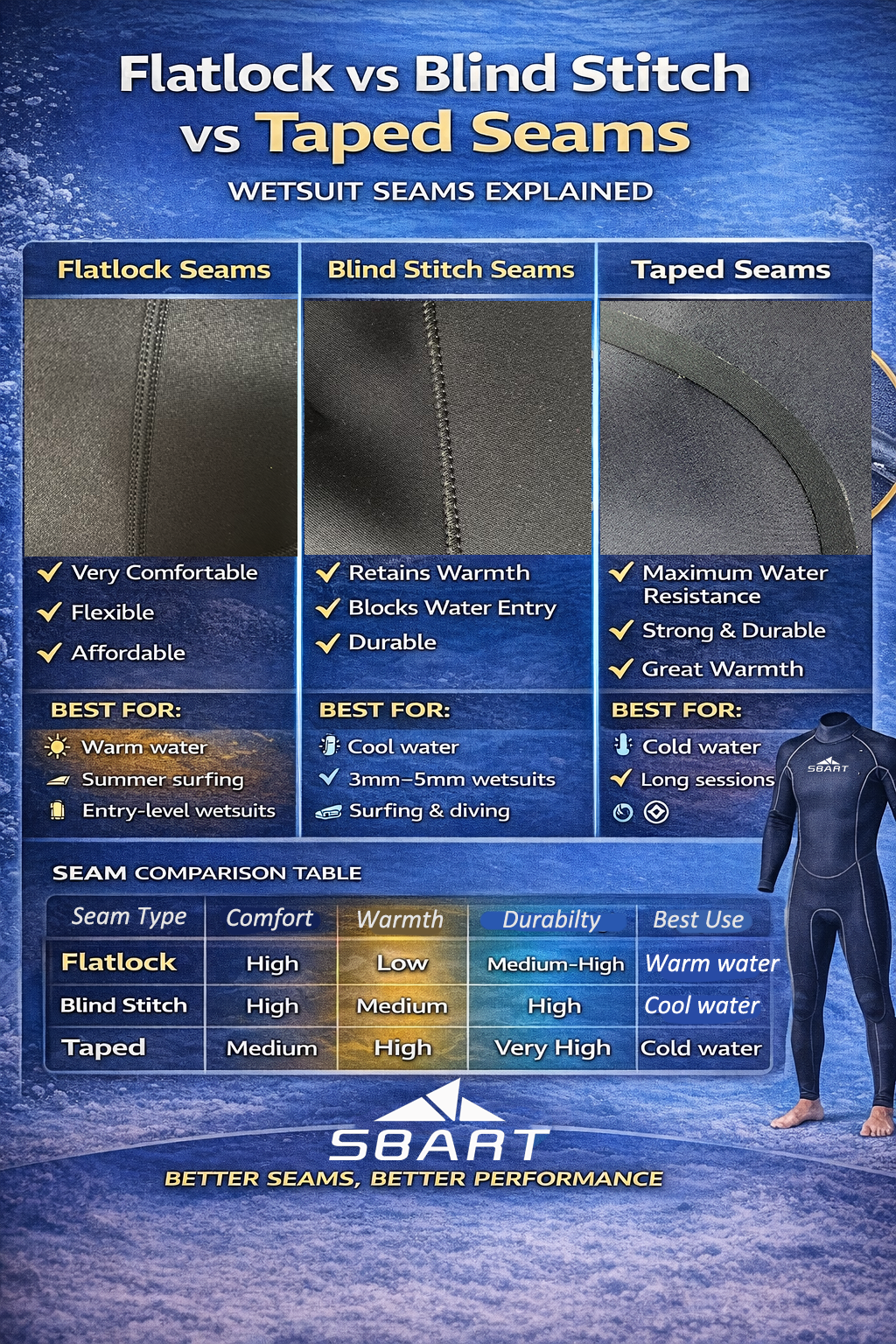
Wetsuit Seams Explained: Why Stitching Matters
Many people focus on neoprene thickness and material—but ignore seam construction. In reality, seams directly affect how much water enters the wetsuit and how long it lasts.
Here’s what you need to know.
1. Flatlock Seams
Flatlock seams are created by overlapping panels and stitching them together flat.
Pros:
-
Very comfortable
-
Flexible
-
Affordable
Cons:
-
Not waterproof
-
Allows water to pass through seams
Best for:
-
Warm water
-
Summer surfing
-
Entry-level wetsuits
Flatlock seams are ideal when warmth is not the top priority.
2. Blind Stitch Seams
Blind stitching partially penetrates the neoprene without stitching all the way through.
Pros:
-
Great balance of warmth and flexibility
-
Reduces water entry
-
Durable
Cons:
-
Slightly higher cost than flatlock
Best for:
-
Cool water
-
3mm–5mm wetsuits
-
Surfing and diving
This is the most common seam type in mid- to high-end wetsuits.
3. Taped Seams
Taped seams add a waterproof tape over blind-stitched seams.
Pros:
-
Maximum water resistance
-
Strong seam reinforcement
-
Excellent thermal retention
Cons:
-
Higher cost
-
Slightly less stretch
Best for:
-
Cold water
-
Long sessions
-
Performance-focused users
Seam Comparison Table
| Seam Type | Comfort | Warmth | Durability | Best Use |
|---|---|---|---|---|
| Flatlock | High | Low | Medium | Warm water |
| Blind Stitch | High | Medium–High | High | Cool water |
| Taped | Medium | High | Very High | Cold water |
Why SBART Seam Construction Performs Better
SBART wetsuits use:
-
Precision blind stitching
-
Reinforced stress points
-
Optional seam taping on cold-water models
This ensures warmth, comfort, and long-term durability without unnecessary bulk.
Final Thoughts
Seam construction is not just a technical detail—it directly affects how warm and comfortable your wetsuit feels in the water.
Choose flatlock for freedom, blind stitch for balance, and taped seams for maximum protection.
A better seam means a better session.