
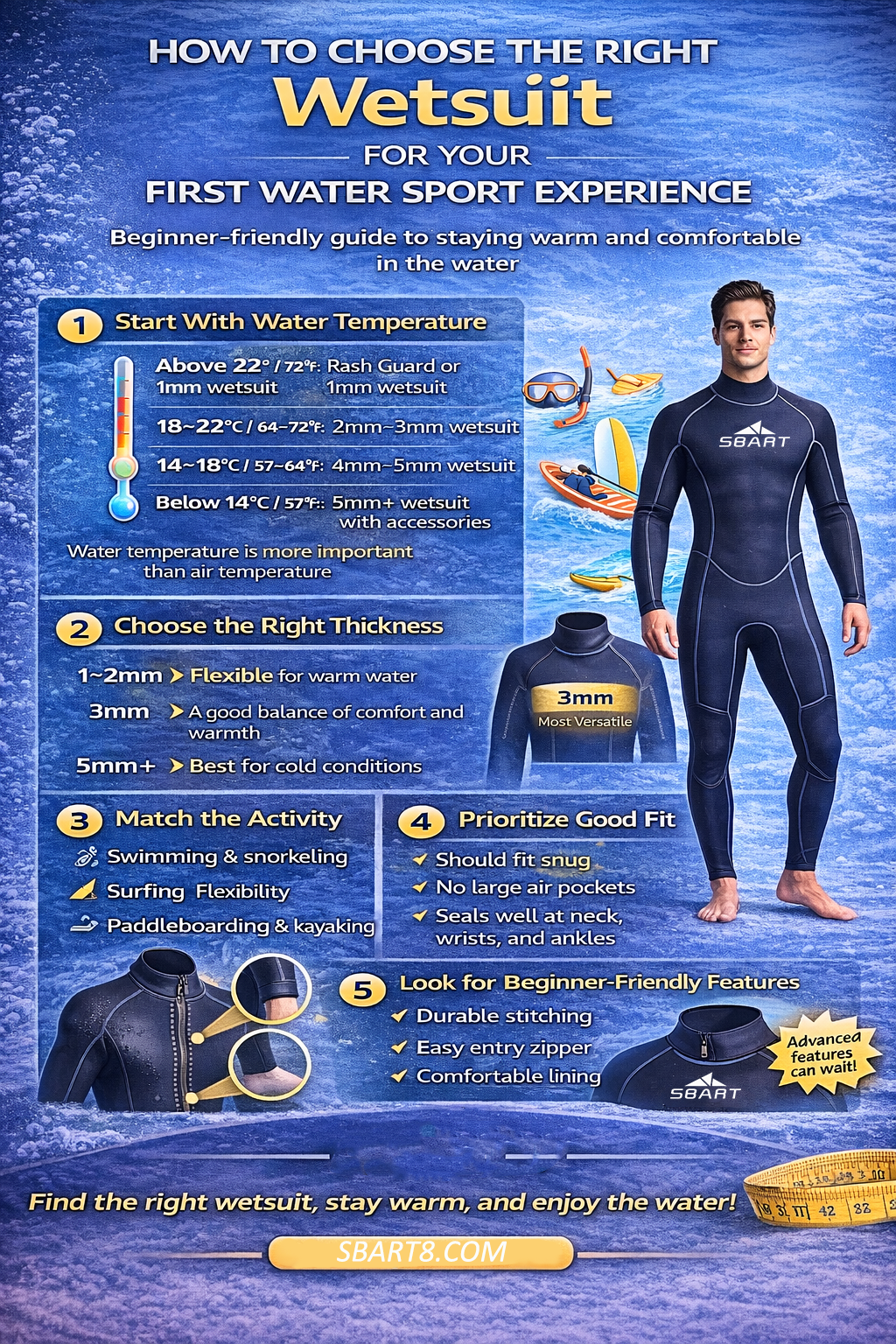
Buying your first wetsuit is an exciting step into the world of water sports—but it can also feel overwhelming. With so many styles, thickness options, and technical terms, beginners often worry about choosing the wrong one.
The good news? Selecting the right wetsuit is simpler than it looks. Once you understand a few key factors, you can confidently choose a wetsuit that keeps you warm, comfortable, and ready to enjoy your time in the water.
This guide breaks it all down—no technical background required.
1. Start With Water Temperature, Not Air Temperature
One of the most common beginner mistakes is choosing a wetsuit based on air temperature alone. Water temperature is far more important.
General guideline for beginners:
-
Above 22°C / 72°F: Rash guard or 1mm wetsuit
-
18–22°C / 64–72°F: 2mm–3mm wetsuit
-
14–18°C / 57–64°F: 4mm–5mm wetsuit
-
Below 14°C / 57°F: 5mm+ wetsuit with accessories
A properly chosen wetsuit prevents heat loss and allows you to stay in the water longer without fatigue.
2. Choose the Right Thickness for Comfort and Flexibility
Wetsuit thickness affects both warmth and mobility. Beginners often think “thicker is better,” but that’s not always true.
-
Thinner wetsuits (1–2mm) offer better flexibility and are ideal for warm conditions.
-
Mid-range wetsuits (3mm) are the most popular choice for beginners, balancing warmth and movement.
-
Thicker wetsuits (5mm) provide excellent insulation but can feel restrictive if overkill for your conditions.
For most first-time users, a 3mm wetsuit is a safe and versatile starting point.
3. Match the Wetsuit to Your Activity
Different water sports place different demands on your body.
-
Swimming & snorkeling: Prioritize comfort and moderate insulation
-
Surfing: Look for flexibility in shoulders and arms
-
Paddleboarding & kayaking: Slightly thinner suits often work better due to higher movement and body heat
If you’re trying multiple activities, choose a general-purpose wetsuit rather than a sport-specific extreme design.
4. Fit Matters More Than Brand or Price
A wetsuit should fit like a second skin—snug but not painful.
A properly fitted wetsuit should:
-
Feel tight when dry but not restrict breathing
-
Have no large air pockets or loose folds
-
Sit smoothly at the neck, wrists, and ankles
If water flushes in easily, the wetsuit won’t keep you warm. When in doubt, prioritize fit over thickness or style.
5. Entry-Level Features Are More Than Enough
As a beginner, you don’t need every advanced feature on the market.
Focus on essentials:
-
Durable stitching
-
Comfortable lining
-
Easy entry zipper (back zip or chest zip)
Advanced materials and competition-level designs can wait until you gain more experience.
Conclusion
Your first wetsuit should help you enjoy the water—not complicate the experience. By focusing on water temperature, thickness, activity type, and proper fit, you’ll find a wetsuit that supports your performance and keeps you comfortable from your very first session.
Once you’re confident and warm in the water, everything else becomes easier.