
When buying a wetsuit, thickness is one of the most important factors—but also one of the most misunderstood. A wetsuit that is too thin can leave you cold and fatigued, while one that is too thick may restrict movement and reduce performance.
This guide will help you choose the right wetsuit thickness based on water temperature, activity type, and personal comfort.
How Wetsuit Thickness Works
Wetsuit thickness is measured in millimeters (mm) and usually written as two numbers, such as 3/2mm.
-
The first number refers to the thickness around the torso
-
The second number refers to the thickness in the arms and legs
Thicker neoprene provides better insulation, while thinner neoprene improves flexibility.
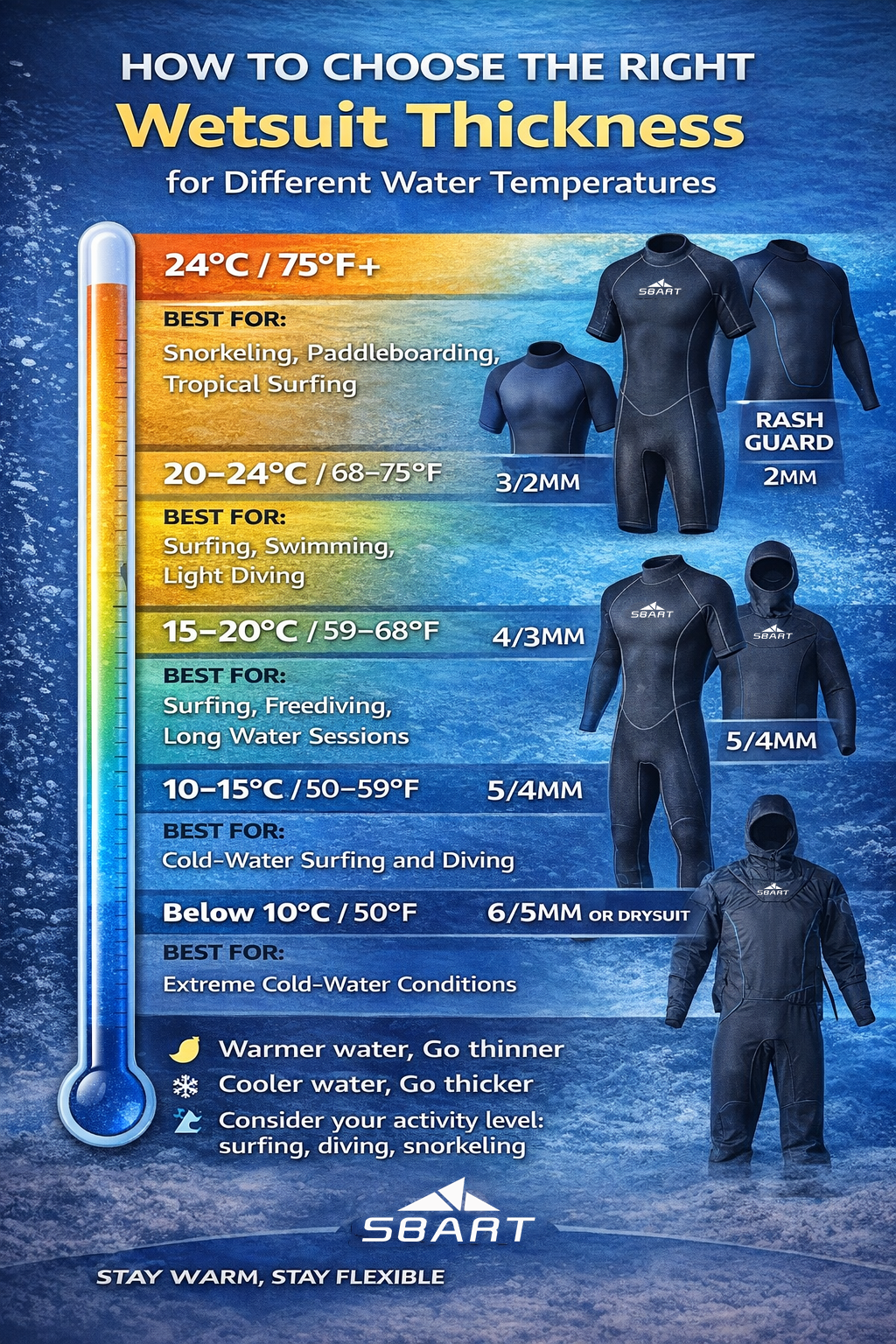
Wetsuit Thickness by Water Temperature
24°C / 75°F and above
-
Recommended: Rash guard or 2mm wetsuit
-
Best for: Snorkeling, paddleboarding, tropical surfing
20–24°C / 68–75°F
-
Recommended: 3/2mm wetsuit
-
Best for: Surfing, swimming, light diving
15–20°C / 59–68°F
-
Recommended: 4/3mm wetsuit
-
Best for: Surfing, freediving, long water sessions
10–15°C / 50–59°F
-
Recommended: 5/4mm wetsuit
-
Best for: Cold-water surfing and diving
Below 10°C / 50°F
-
Recommended: 6/5mm wetsuit or drysuit
-
Best for: Extreme cold-water conditions
Consider Your Activity
Different water sports generate different levels of body heat:
-
Surfing: Requires flexibility—avoid overly thick suits
-
Diving: Less movement—prioritize warmth
-
Snorkeling: Short sessions—lighter wetsuits are sufficient
Choosing the right balance between warmth and mobility is key.
Fit Matters More Than Thickness
Even the thickest wetsuit will not keep you warm if it does not fit properly. A good wetsuit should:
-
Fit snugly without restricting breathing
-
Have minimal water flushing
-
Sit flat at the neck, wrists, and ankles
A well-fitted 3mm wetsuit can often feel warmer than a loose 5mm suit.
Why SBART Wetsuits Perform Better
SBART wetsuits are engineered with:
-
High-stretch neoprene for flexibility
-
Flatlock or blind-stitched seams for comfort
-
Ergonomic paneling to reduce fatigue
This allows you to stay warmer without sacrificing movement.
Final Thoughts
The right wetsuit thickness depends on water temperature, activity type, and personal tolerance to cold. Use this guide as a baseline, then fine-tune based on your experience.
Choosing the correct wetsuit means longer sessions, better performance, and more enjoyment in the water.