
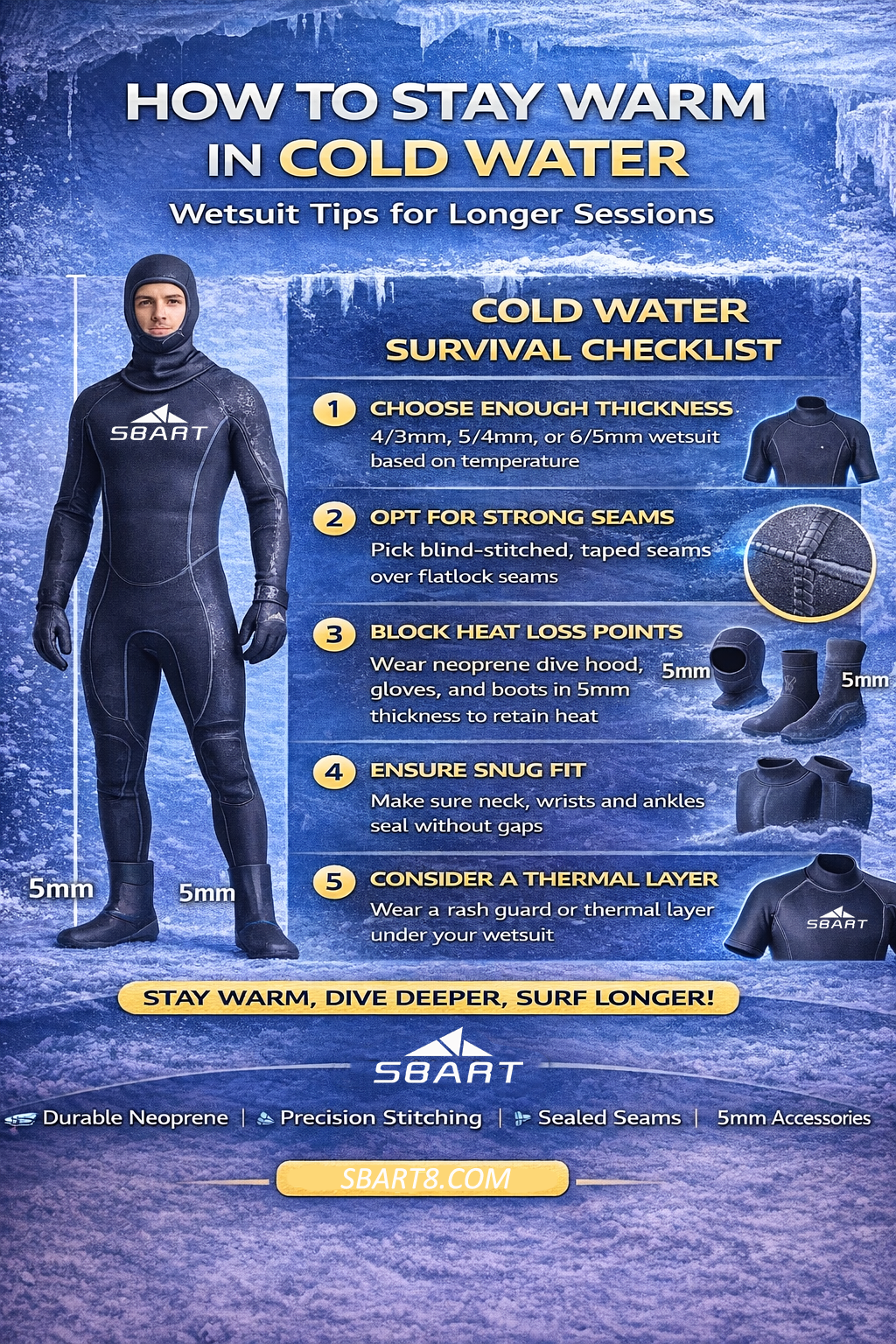
Cold water drains body heat fast. Even experienced divers and surfers underestimate how quickly temperature loss affects comfort and performance.
Here’s how to fight back.
1. Choose the Right Wetsuit Thickness
For cold water, thickness matters — but only when combined with proper fit.
-
15–20°C / 59–68°F → 4/3mm wetsuit
-
10–15°C / 50–59°F → 5/4mm wetsuit
-
Below 10°C / 50°F → 6/5mm wetsuit or drysuit
A well-fitted 4/3mm often outperforms a loose 5mm.
2. Pay Attention to Seam Construction
In cold water, seam choice is critical.
-
Flatlock seams allow water flow — avoid them
-
Blind-stitched seams reduce flushing
-
Taped seams provide maximum thermal protection
Less water movement = more retained heat.
3. Block Heat Loss at Key Points
Most heat escapes through:
-
Head
-
Hands
-
Feet
Add:
-
Neoprene hood
-
Gloves
-
Boots
These small additions can dramatically extend session time.
4. Fit Is Your First Line of Defense
Cold water finds every gap.
Check:
-
Neck seal sits flat
-
No loose areas at lower back
-
Wrists and ankles seal properly
Even premium neoprene fails if the fit is wrong.
5. Layer Smart, Not Heavy
Wearing a rash guard or thermal layer under your wetsuit:
-
Improves comfort
-
Reduces skin irritation
-
Adds slight warmth
Avoid bulky layers that restrict movement.
Why SBART Wetsuits Perform in Cold Water
SBART cold-water wetsuits are built with:
-
High-density neoprene
-
Precision blind stitching
-
Reinforced stress zones
Designed to keep heat in — and cold out.
Final Thoughts
Cold water shouldn’t limit your time in the ocean.
With the right wetsuit setup, longer sessions are not only possible — they’re comfortable.
Warmth is not luck. It’s design.