
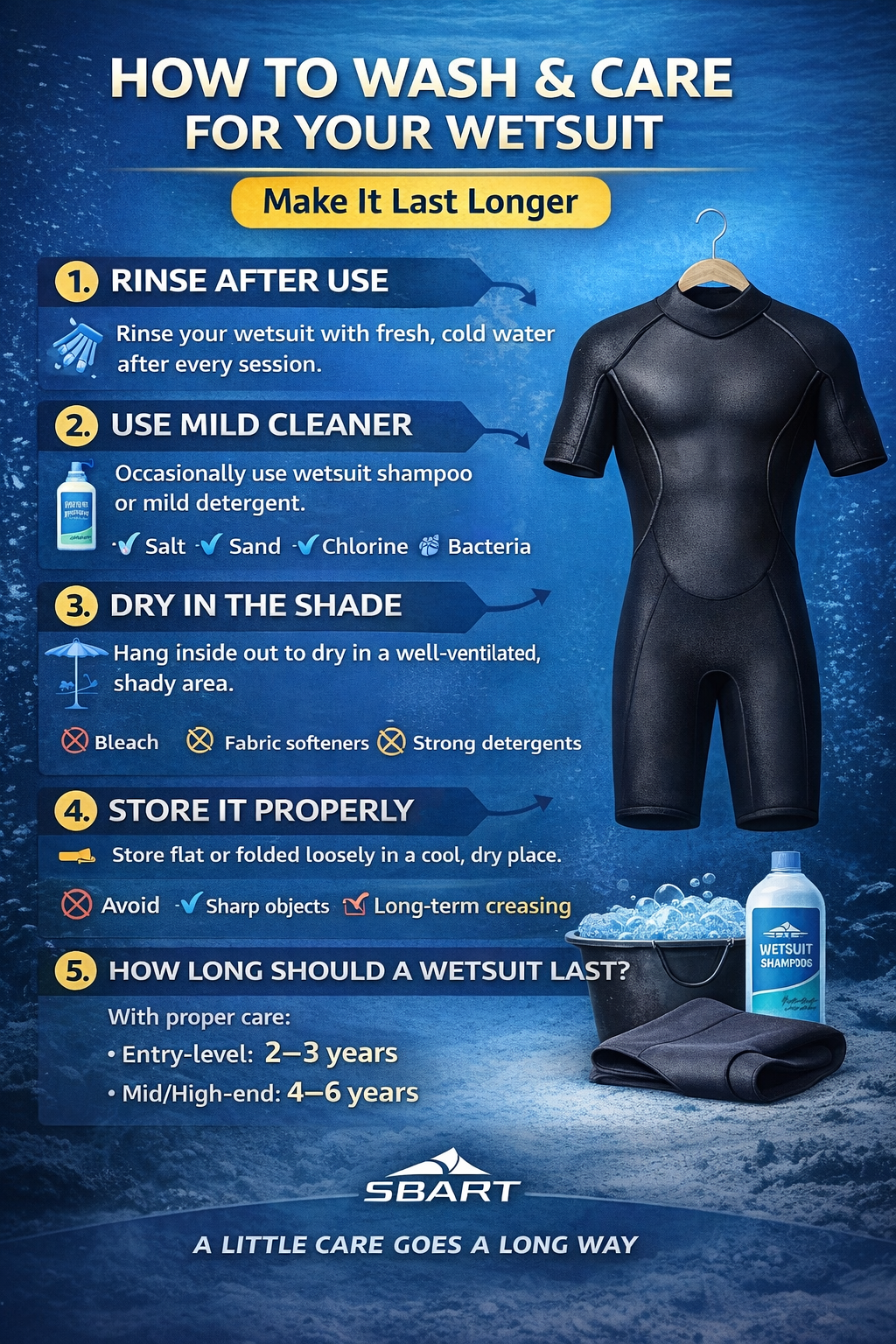
Many wetsuits lose flexibility, smell bad, or tear early — not because of poor quality, but because of improper care.
1. Rinse Immediately After Use
After every session, rinse your wetsuit thoroughly with fresh, cold water.
This removes:
-
Salt
-
Sand
-
Chlorine
-
Sweat and bacteria
Never let a wetsuit dry before rinsing — salt crystals damage neoprene over time.
2. Use Mild Cleaner When Needed
For deeper cleaning, use a wetsuit-specific shampoo or mild detergent occasionally.
Avoid:
-
Bleach
-
Fabric softeners
-
Strong detergents
These chemicals break down neoprene and weaken seams.
3. Dry It the Right Way
Always dry your wetsuit:
-
Inside out first
-
In the shade
-
In a well-ventilated area
Never:
-
Use a dryer
-
Hang in direct sunlight
-
Place near heaters
Heat and UV are the fastest ways to age neoprene.
4. How to Hang a Wetsuit Properly
Use a wide hanger or fold the wetsuit over a bar at the waist.
Avoid thin hangers — they stretch shoulders and damage seams.
Once the inside is dry, turn it right-side out and finish drying.
5. Storage Tips That Matter
When not in use:
-
Store flat or folded loosely
-
Keep away from sharp objects
-
Avoid long-term compression
Never store a wetsuit damp or folded tightly for long periods.
How Long Should a Wetsuit Last?
With proper care:
-
Entry-level wetsuits: 2–3 years
-
Mid to high-end wetsuits: 4–6 years
Good maintenance can double the lifespan of your wetsuit.
Final Thoughts
Taking care of your wetsuit takes less than five minutes — and saves you money for years.
A clean, well-maintained wetsuit stays warmer, smells better, and performs exactly as it should.
Treat your wetsuit well, and it will return the favor in every session.