
SBR, SCR, and CR Neoprene Explained
Neoprene is the heart of every wetsuit. It determines how warm, flexible, and durable your suit will feel in real water conditions.
1. What Is SBR Neoprene?
SBR (Styrene-Butadiene Rubber) is the most commonly used neoprene material.
Pros:
-
Affordable
-
Good flexibility
-
Suitable for beginners and recreational users
Cons:
-
Lower elasticity recovery
-
Shorter lifespan compared to premium materials
Best for: Entry-level wetsuits and occasional use.
2. What Is SCR Neoprene?
SCR (Styrene-Chloroprene Rubber) blends SBR with CR to balance performance and cost.
Pros:
-
Better stretch and durability than SBR
-
Improved thermal retention
-
Mid-range pricing
Cons:
-
Not as soft as full CR neoprene
Best for: Regular divers and surfers who want performance without premium pricing.
3. What Is CR Neoprene?
CR (Chloroprene Rubber) is the highest-grade neoprene used in professional wetsuits.
Pros:
-
Excellent elasticity and shape recovery
-
Superior thermal insulation
-
Long-lasting durability
Cons:
-
Higher cost
Best for: Advanced users, cold-water diving, and long-session performance.
4. Comparison Table
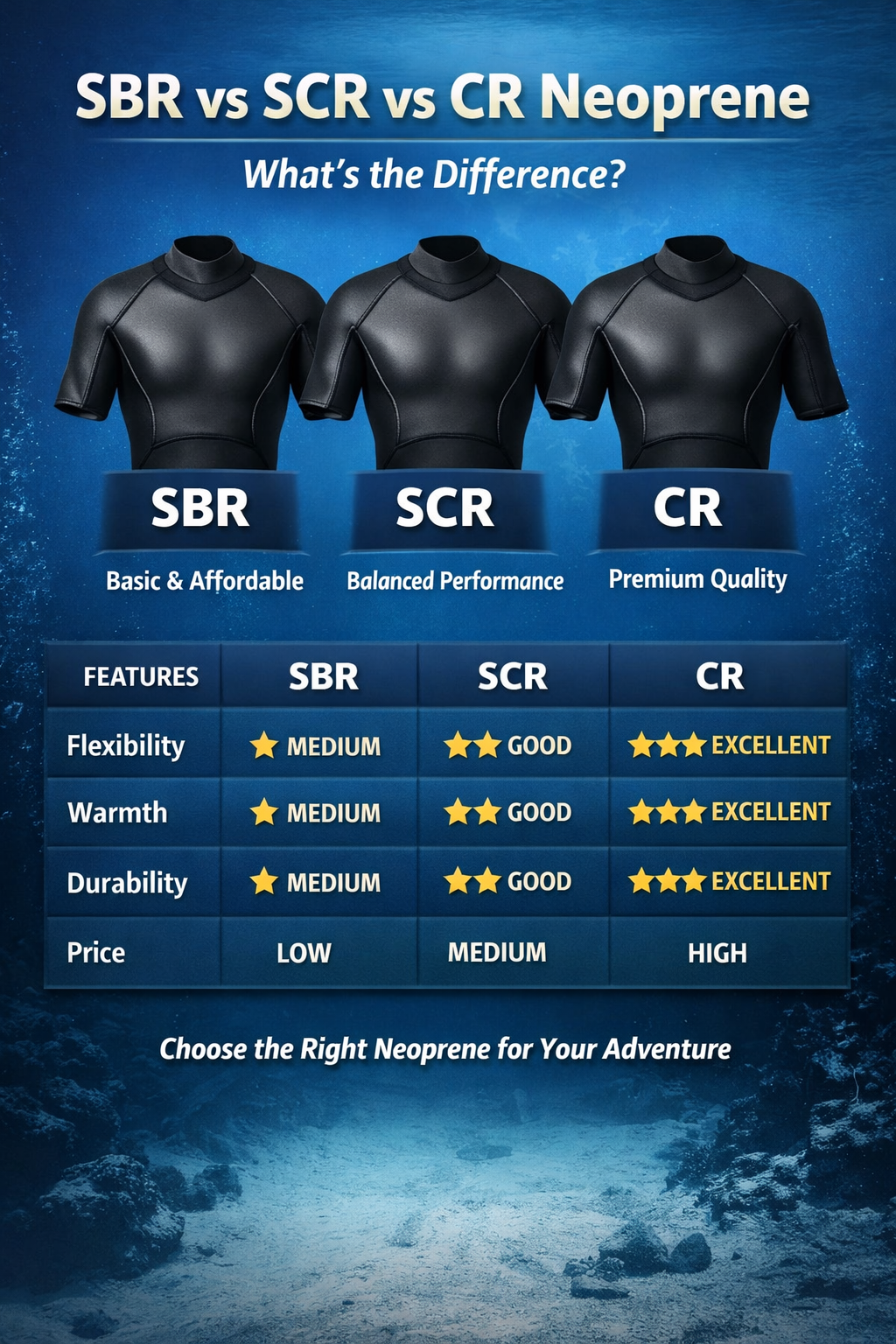
| Feature | SBR | SCR | CR |
|---|---|---|---|
| Flexibility | Medium | Good | Excellent |
| Warmth | Medium | Good | Excellent |
| Durability | Medium | Good | Excellent |
| Price | Low | Medium | High |
Final Advice
If you are new to water sports, SBR wetsuits offer unbeatable value.
If you dive or surf regularly, SCR is the sweet spot.
If performance matters more than price, CR neoprene is worth every cent.
The right material makes the right experience.